Preservation‑Led Office Design
The Concord Collaborative
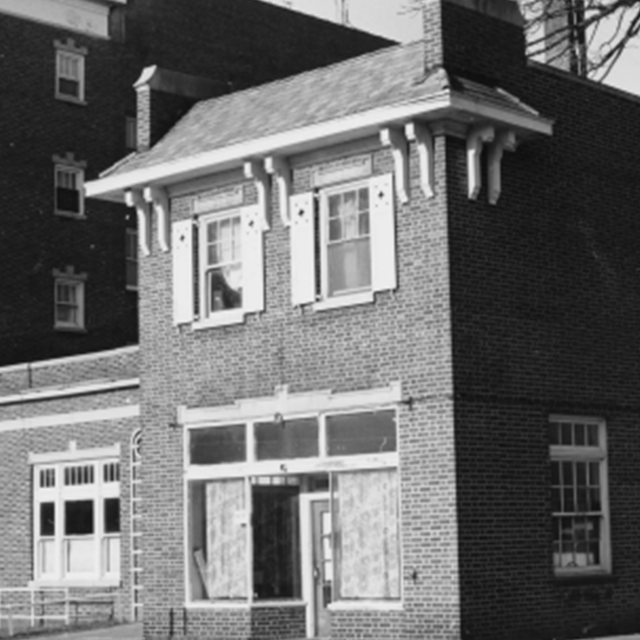
Originally constructed in 1919, The Concord is a two‑story commercial building in Des Moines’ historic Sherman Hill neighborhood. Once home to a neighborhood bakery and grocery store, the building served as a daily community touchpoint before falling into disuse in recent decades. Through a thoughtful adaptive reuse effort, the SHYFT design team, now part of SSOE Group, teamed with DEV Partners to transform the vacant structure into The Concord Collaborative: a modern workplace rooted in history, flexibility, and community.
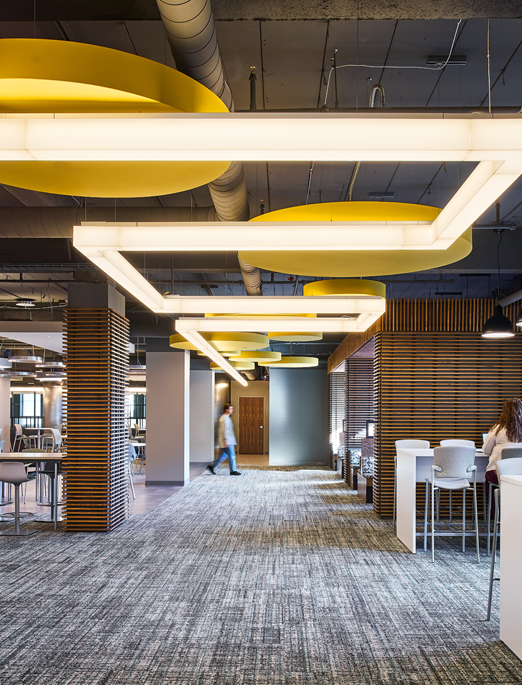
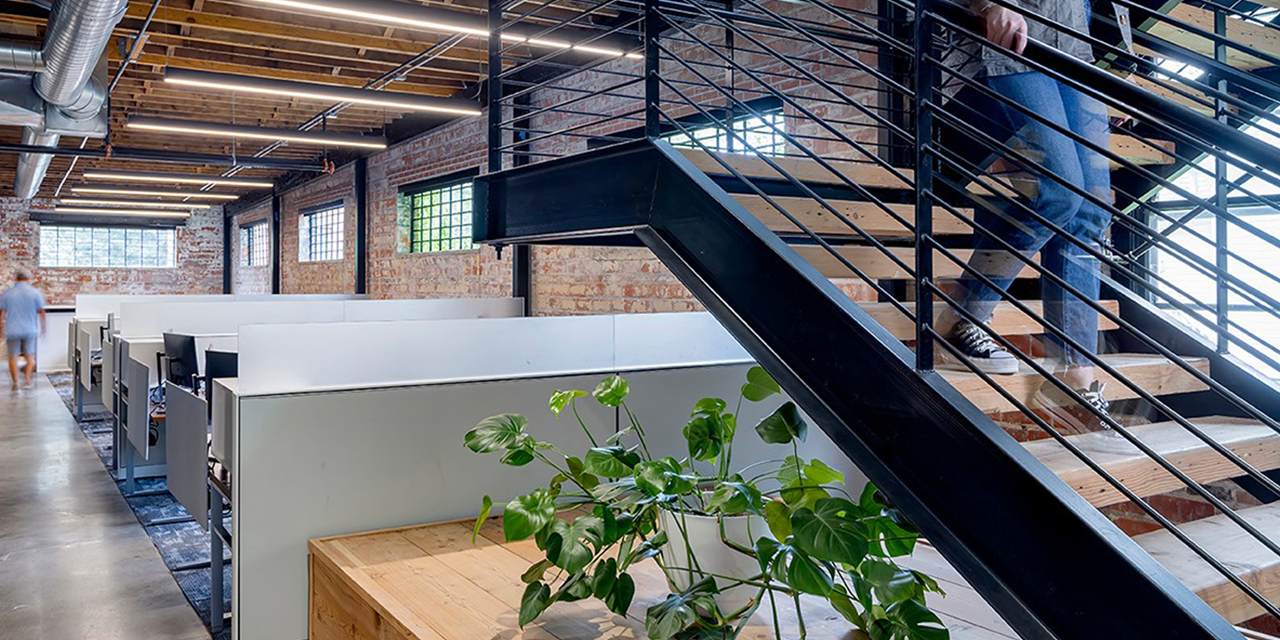
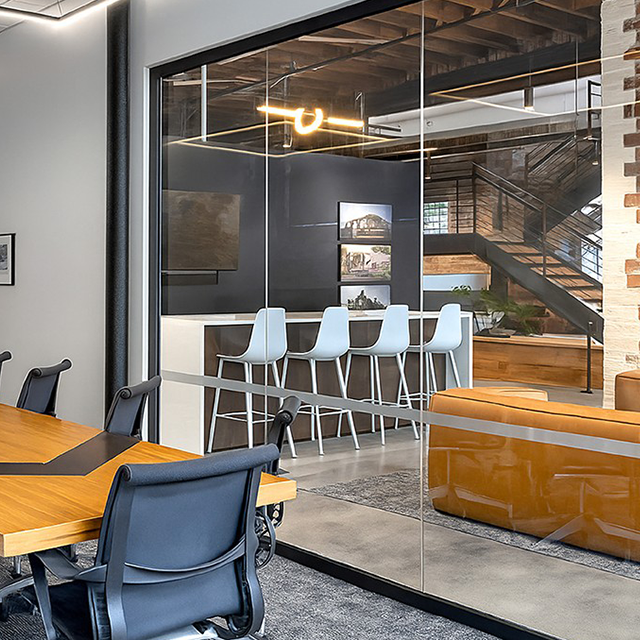
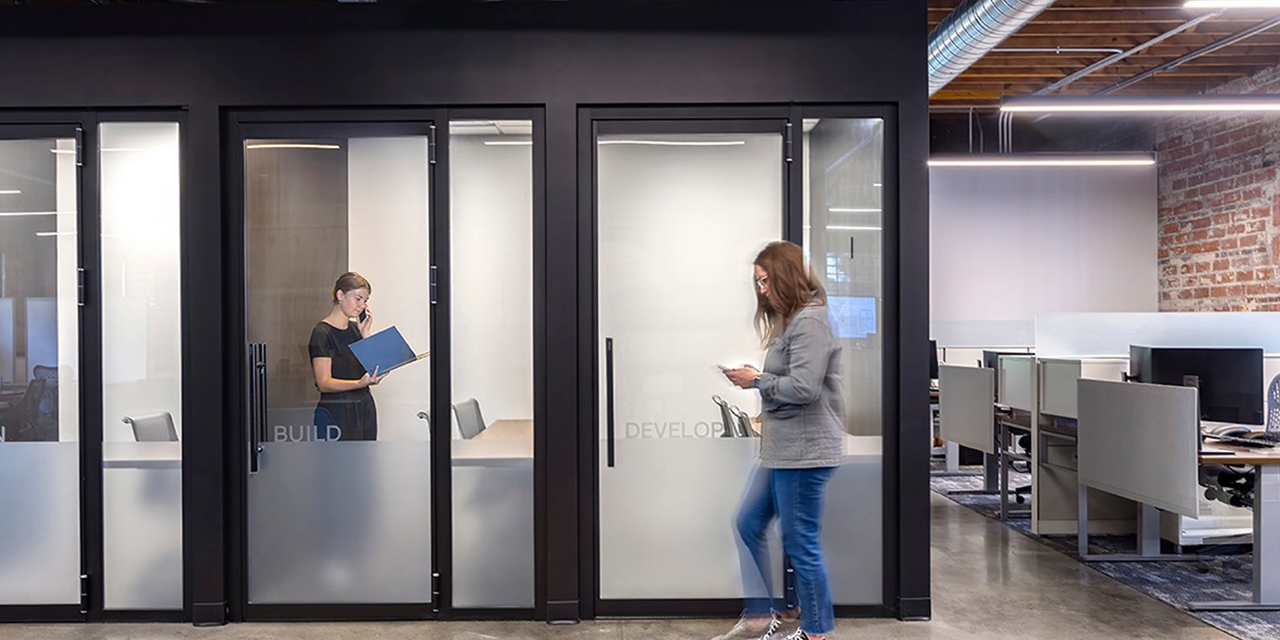
The design balances preservation with performance, retaining historic character while introducing a highly functional office environment. Inside, the recast space supports a range of work styles, with open lounge areas, informal meeting spaces, enclosed conference rooms, and virtual conferencing zones throughout.
Shared amenities, including a central kitchenette and flexible workstations, encourage collaboration and adaptability as needs evolve. A key focus was restoring original materials: brick masonry was carefully cleaned using dry ice blasting, while original wood beams and flooring were preserved and refreshed rather than replaced.
Historic mosaic tile at the storefront entry remains intact, maintaining a tangible connection to the building’s past. Window openings were preserved and enhanced with restored frames and historically accurate replacements, improving daylight while reinforcing architectural character. A contemporary metal stair links the two levels, maintaining openness and light flow.
At street level, the storefront has been reestablished as a welcoming entry and informal gathering space, renewing the building’s long‑standing relationship with the neighborhood. By working within the original footprint, the project maximizes efficiency, minimizes waste, and preserves embodied carbon.
Today, The Concord Collaborative serves as both a modern workplace and a visible reinvestment in Sherman Hill—demonstrating how adaptive reuse can respect architectural heritage while supporting contemporary commercial needs.
In fact, we loved the result enough to move in ourselves.

Autodesk Construction Cloud (ACC) is SSOE’s enterprise-wide project delivery platform. We partner with the Autodesk Product team and have research access. Use of the AI Assistant allows our design teams, owners, and general contractors the ability to query the project specifications for quality, answers, and more rapid responses to RFIs, submittals, or issues.
SSOE has developed a proof-of-concept to use an AI Agent to act as a Master Engineer and Architect trained in SSOE’s processes, best-known-methods, and trainings. Our data structure is being remodeled to enable better use of our proprietary knowledge to train the agent on the ‘SSOE way’.
SSOE is actively piloting AI Chat large language models (LLMs) or copilots that use Natural Language Processing (NLP) to streamline both design and development tasks, transforming how our teams interact with software and each other.
By integrating chat LLM engines into platforms like Revit, we’re enabling users to prompt complex actions using simple, conversational commands. In Revit, this means automating tasks such as modeling elements, cleaning up parameter data, managing annotations and dimensions, and organizing sheets—without writing scripts. These automations and quality prompts can be shared across project teams, accelerating workflows and reducing manual effort.
Similarly, our internal Software Development Community is leveraging GitHub Copilot to expedite coding tasks. Developers can generate and refine code using NLP prompts, tapping into GitHub’s extensive Repo to move faster from concept to implementation.
Together, these tools represent a shift from traditional, expert-driven scripting to intuitive, AI-assisted automation, unlocking new levels of efficiency and scalability across our projects.
We helped our client visualize and optimize façade design for occupant comfort—long before breaking ground through the use of the Autodesk Forma tool. It allows the designer to rapidly experiment with the building’s geometry and façade design to promote sustainability, prioritizing quality of spaces and comfort for end uses, especially in extreme climates (daylighting and microclimate analysis tools) at the project’s exact geographic location, using location-specific environmental data.
Discover how SSOE is using Autodesk Forma to improve sustainability outcomes for industrial projects: SSOE Group: Improving sustainability outcomes for industrial projects with Autodesk Forma.
SSOE is utilizing Microsoft Copilot Edge and M365 to significantly enhance work efficiency and accuracy across various departments. Copilot is accessible to all staff after training. Key areas of application include using it as a writing assistant, for idea generation, document summarization and generation, research assistant, excel assistant, programming code assistant, language translations, product comparison and data analysis. Use of Copilot has become part of the everyday life of SSOE employees who have identified key ways it can help them become more efficient with their daily tasks as well as more accurate in their deliverables.
Today, 100% of SSOE employees have taken the voluntary training and have access to Copilot Edge, achieving early our October 1, 2025 goal.
We found ourselves in need of a more robust tool to enhance resource forecasting and staff assignment capabilities. Instead of waiting for the perfect tool, we’re building it. SSOE’s in-house technology team has developed and piloted a tool that aims to forecast optimal staff mix and duration for new projects against existing workload to better understand capacity and manage resources efficiently. Additionally, the tool will allow teams to identify gaps to optimal staff mix.