
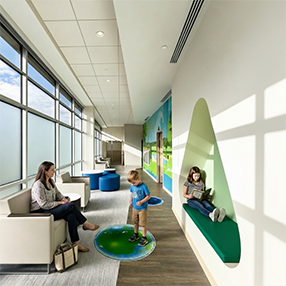
When people hear the term “pediatric healthcare,” they often picture colorful murals, playful furniture, and spaces designed for young children. While those elements can be appropriate in certain settings, they represent only a small part of pediatric healthcare design.
Pediatric care spans a remarkable range of developmental stages—from premature infants weighing less than two pounds to teenagers preparing for adulthood. Each age group experiences healthcare differently, processes information differently, and has unique physical, emotional, and social needs. As a result, healthcare interior designers have a responsibility to create environments that support development across childhood and adolescence—not simply design spaces that look kid-friendly.
Thoughtful pediatric design recognizes childhood is constantly evolving.
1 | Designing for Infants: Supporting Development from the Beginning
For neonatal intensive care units (NICUs), design decisions can directly influence infant development. ¹
Interior designers play an important role by creating spaces that promote healing and development, invite family involvement, and enhance staff workflow. This is done by evidence-based space planning and thoughtful selection of components such as finishes, lighting, and furnishings.
Providing comfortable spaces for parents to remain close to their little ones reinforces the family-centered approach that has become a cornerstone of pediatric healthcare.
2 | Early Childhood: Reducing Fear Through Environment
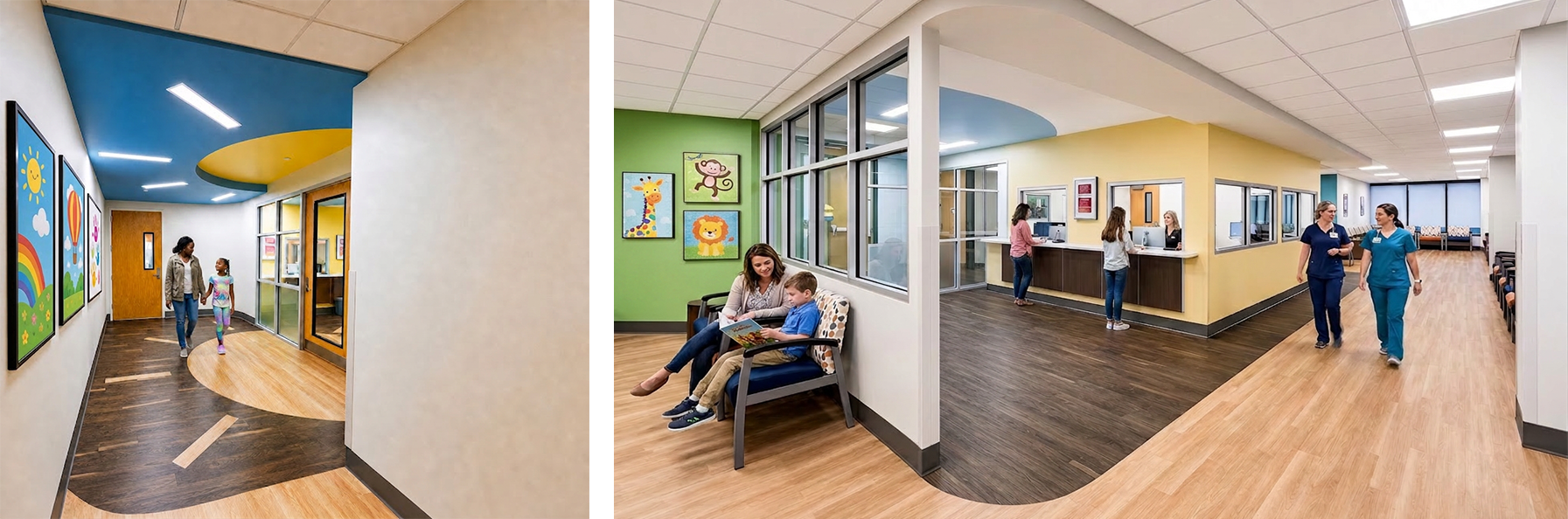
Young children often have limited understanding of medical procedures. Much of their anxiety stems from unfamiliar surroundings and a perceived loss of control.
Interior design can help reduce stress by creating environments that feel understandable and welcoming.²
Design strategies may include:
- Age-appropriate furniture
- Warm, non-institutional materials
- Positive distraction through artwork and interactive elements
- Clear visual landmarks
- Comfortable family spaces
- Sensory-friendly quiet spaces
Rather than overwhelming children with bright colors or busy graphics, designers can use intentional sensory experiences that support calmness and curiosity.
3 | School-Age Children: Supporting Learning and Confidence
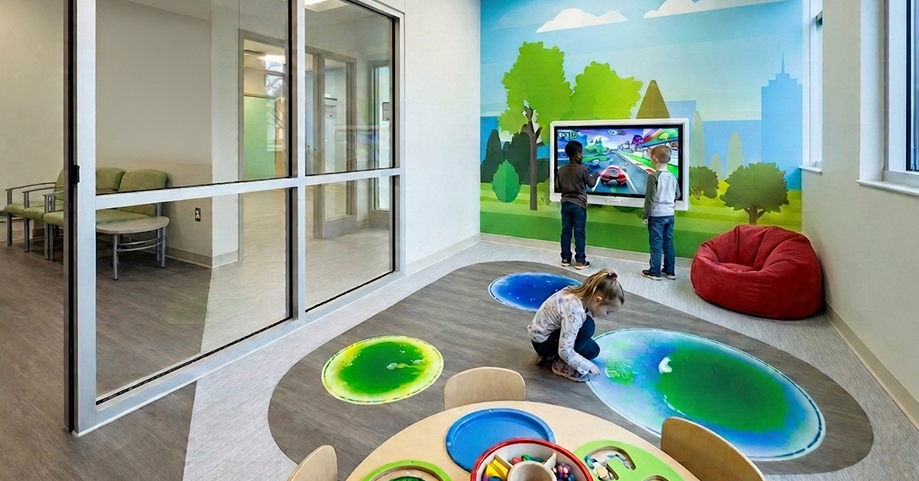
Children entering elementary school are increasingly aware of their surroundings. They ask questions, seek information, and benefit from environments that encourage exploration.
Thoughtfully designed healthcare spaces can support this developmental stage by incorporating educational graphics, interactive waiting areas, flexible family spaces, and intuitive wayfinding that helps children navigate their environment with greater confidence.
Small opportunities for interaction or independence can help children feel more comfortable and engaged during medical visits.

4 | The Often-Overlooked Group: Preadolescents
One of the most underserved populations in pediatric healthcare design is the preadolescent patient.
Children between approximately ages 9 and 12 years old occupy a unique developmental stage. They are beginning to develop independence yet still appreciate playful environments. They seek privacy but continue to rely on parents for reassurance. They may no longer identify with cartoon themes, but adult-oriented environments can feel equally alienating.³
Healthcare interiors should acknowledge this transition.
Rather than relying on themes designed exclusively for younger children, designers can create flexible environments featuring:
- Contemporary colors and graphics
- Interactive digital experiences
- Spaces supporting both family engagement and growing independence
- Flexible spaces scaled appropriately for older children
Preadolescent spaces require balance, creating environments that feel age-appropriate without becoming overly clinical.
5 | Adolescents: Respecting Identity & Independence
Teenagers often have healthcare experiences that differ significantly from younger pediatric patients.
Whether visiting an outpatient clinic, receiving cancer treatment, or managing a chronic illness, adolescents often seek healthcare environments supporting privacy, personal control, and social connection. Design strategies such as acoustic and visual buffers can enhance comfort and discretion, while respectful, age-appropriate settings help reinforce a sense of independence and belonging during care experiences.⁴
Healthcare interiors should reflect these priorities.
Providing charging stations, individual seating options, quiet spaces, and flexible family accommodations acknowledges teenagers’ growing independence while still supporting family involvement when desired.
Family-Centered Design Evolves with the Patient
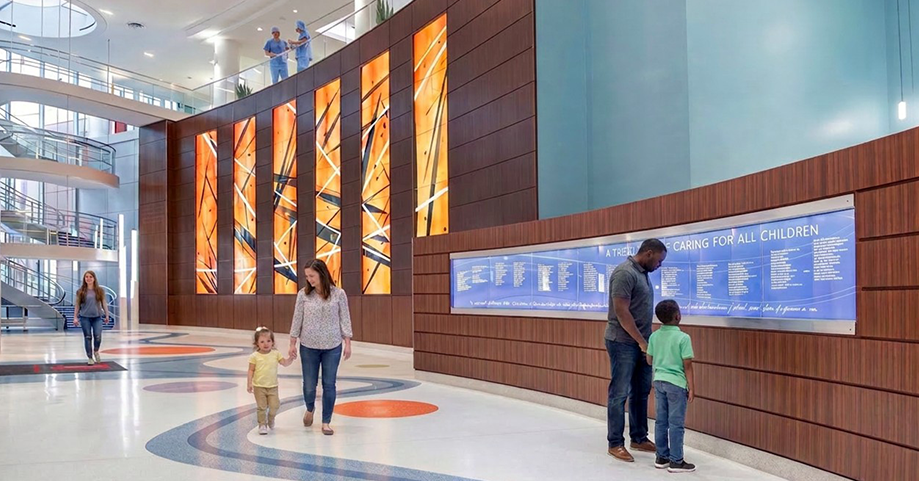
Parents remain essential partners throughout pediatric care, but their role changes as children mature.
 For infants, parents often remain continuously present. For school-age children, families help explain procedures and provide reassurance. For adolescents, families may shift toward supporting decision-making while encouraging greater independence.
Interior spaces should reflect these evolving relationships by providing adaptable family spaces that accommodate different patterns of interaction across developmental stages.
Designing for Childhood Means Designing for Growth
The best pediatric healthcare environments recognize children are constantly changing. Flexible design helps healthcare environments evolve alongside patients and their families. Designers can incorporate adaptable spaces and systems that can remain appropriate and relevant throughout childhood and adolescence.
The healthcare interior design approach should support not only treatment, but also development, dignity, family relationships, and emotional well-being.⁵
Pediatric healthcare is not exclusively designed for young children. It is a specialized field that requires designers to understand developmental psychology and the needs of every stage of childhood. This allows the space to help reduce anxiety, encourage healing, and improve the overall patient and family experience.
The most meaningful pediatric spaces are those that meet children where they are while supporting where they are going.
Early decisions shape everything. Let’s compare notes.

Brenda Dietz, CHID, GA-RID, IIDA, LEED AP ID+C
Multi-Certified Healthcare Interior Designer Specializing in Pediatric, Acute, and Specialized Care, Creating Patient-Centered Environments Aligning with our Clients’ Visions, with Over 30 Years of Experience and Strong Presence in Both the Toledo and Atlanta Markets.

Beth Benzenberg, IIDA, NCIDQ
Specialized Healthcare Interior Designer Focused on Creating Environments that Convey Calm, Intuitive, and Supportive to Patients, Family, and Clinical Staff with a Strong Presence in the Columbus Market.

Suzon Hashemi, Associate IIDA
Healthcare Interior Designer Dedicated to Creating Spaces with a Positive Psychological Impact, Blending Scientific Precision with a People-Centered Approach to Develop Transformative Healthcare Environments that Prioritize the Well-Being of Patients, Caregivers, and Staff, Based in SSOE’s World Headquarters in Toledo..
References
- Ellebany, M. et al. (2025). “Association of NICU design on neurodevelopmental outcomes in preterm neonates born at less than 29 weeks’ gestation.” Journal of Perinatology, 45, 1795–1800. nature.com
- Işık Tosun, H. & Işık, B. (2026). “Designing for Well-Being in Pediatric Patients Scheduled for Surgery.” HERD: Health Environments Research & Design Journal, 19(1), 208–223. sagepub.com
- Yu, C. et al. (2024). “A Scoping Review of Pediatric Healthcare Built Environment Experiences and Preferences Among Children With Disabilities and Their Families.” HERD, 17(2), 309–325. PMC
- American Academy of Pediatrics (2024). “Confidentiality in the Care of Adolescents: Policy Statement.” Pediatrics, 153(5). aap.org
- Sathyanarayanan, H. & Caldas, L. (2025). “From Challenges to Innovations: Expert Insights in Pediatric Healthcare Design.” HERD, 18(4), 180–198. PMC