• Company
        • Overview
        • History
        • News
        • Contact
        • AI at SSOE
        • Inclusion & Community Impact
        • Environmental, Social, and Governance
        • Leadership
        • Design Awards
        • Safety
        • Locations
  • Services
        • Architecture
        • Engineering
        • Program / Project Management
        • Site Evaluation
        • Master Planning
        • Commissioning & Qualification
        • Hazardous Materials Consulting
        • Data / Fire / Security
        • Sustainable Design
  • Markets
        • Industrial
          • Automotive
          • Battery
          • Chemical
          • Consumer Products
          • Data Centers & AI Factories
          • Energy / Solar
          • Food & Beverage
          • Glass
          • Manufacturing
          • Pharmaceutical
          • Semiconductor / Advanced Technology
        • Architectural
          • Airports & Aviation
          • Corporate Workplace
          • Government / Judicial
          • Healthcare
          • Higher Education
          • K-12 Education
          • Residential / Hospitality / Mixed-Use
          • Workforce Development / Training Centers
  • Our Work
  • Careers
  • Menu Menu
Contact
News & Views Category: Markets|News
September 2, 2026/in News, Markets|News, Architectural Healthcare Architecture Toledo, Troy, Columbus /by Katie Junga

Healthcare construction costs aren’t slowing down. And with tighter reimbursement models and rising patient expectations, every dollar in your capital plan has to work harder.

The good news? The decisions you make before design even starts—specifically, how you procure your design team—can be the difference between a project that delivers long-term value and one that bleeds budget in change orders.

Here are three procurement strategies we’ve seen set healthcare projects up for success:

1 | Bring the Users to the Table Early, and Keep Them There

The best healthcare projects we’ve seen share one thing in common: Clinical users have a seat at the table from the start. Not just in programming, but in design partner selection, too.

When procurement teams make selection decisions in isolation, the design team can miss critical operational insights only insiders like nurses, physicians, and department heads can provide. That misalignment shows up later as redesign, value engineering, and facilities that don’t support the care model.

Research on government healthcare facilities found owner-requested changes during design and construction, often the result of stakeholders not being engaged early enough, are a leading driver of budget and schedule overruns.¹

Healthcare institutions must take necessary time to plan and coordinate all team members before construction begins, a process that starts with the right people in the room during procurement.²

The real cost equation: Including end-users in A/E selection leads to better-aligned design teams and fewer costly mid-project pivots.

2 | Choose Qualifications Over Low Bid, Especially for Complex Facilities

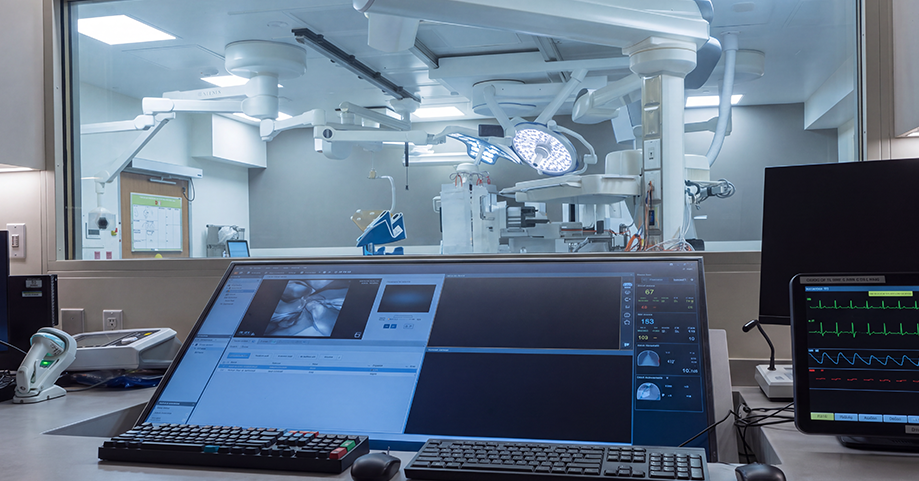
It’s tempting to treat A/E selection like a commodity purchase. But healthcare isn’t a commodity. An inpatient unit can have 15+ utilities running to a single room. Surgery suites require designing for technology that won’t exist for another decade.

When procurement defaults to lowest fee, the savings on design often get erased (and then some) during construction. A landmark study commissioned by AIA found that projects using qualifications-based selection (QBS) experienced just 3% cost growth compared to 6% nationally, and QBS projects were 50% more likely to meet schedule milestones than those selected on fee alone.³ A separate two-year university study confirmed that public agencies using QBS achieve better cost control and higher project satisfaction than those using other procurement methods.⁴

The firms understanding your clinical workflows, patient populations, and regulatory environment will catch problems in programming, not in the field. There’s a reason over 46 states have adopted mini-Brooks acts requiring QBS for design services⁵, treating A/E selection as a commodity runs counter to industry best practice and federal law.

The real cost equation: QBS for complex healthcare projects consistently yields lower total project cost, not just lower design fees.
3 | Invest in Upfront Programming—it’s the Highest-ROI Phase You’ll Ever Fund

Healthcare systems that shortchange the programming and planning phase almost always pay for it later. This is where budgets get validated, consensus gets built, and the design team captures every clinical, operational, and infrastructure requirement before a single line gets drawn.

Consider this: A/E fees typically represent less than 2% of a building’s total lifecycle costs, yet they profoundly influence the other 98%, including construction (~12%) and operations and maintenance (~86%).⁶ Shortchanging the phase with the highest leverage on total cost of ownership is a false economy.

For larger-scale projects—such as acute care facilities, ambulatory surgery centers, behavioral health, and other diagnostic and treatment environments—a significant investment of time, expertise, and resources is required from all stakeholders to successfully plan, design, and deliver these complex projects. Because the facilities being designed today need to serve care models 10–20 years from now.

Studies of healthcare facility projects have found that owner-requested changes are a leading driver of cost and schedule overruns, reinforcing the value of early stakeholder engagement and thorough predesign planning.¹ Spending an appropriate percentage on robust predesign isn’t a luxury; it’s the most effective hedge against scope creep and budget overruns.

The real cost equation: Every dollar invested in programming saves multiples during design and construction. Healthcare systems embracing this consistently report better budget outcomes.

Decisions Shaping Decades

Healthcare procurement is evolving. The systems that treat design partner selection as a strategic decision, not just a purchasing transaction, are the ones building facilities performing for decades.
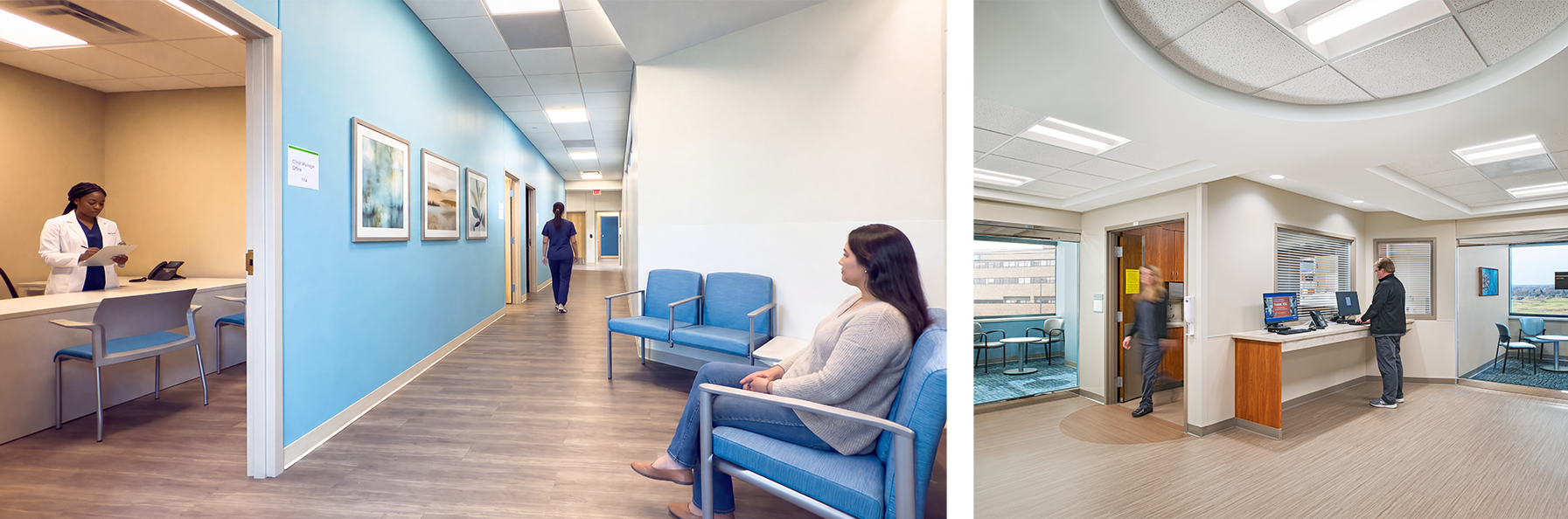
At SSOE, we’ve spent 20+ years designing patient care environments using Lean principles, Evidence-Based Design, sustainable design practices that cut costs long term, and an integrated A/E approach that’s delivered more than $35.5 million in documented cost savings for our healthcare clients.

If your next project is still in the planning stages, that’s exactly the right time to talk.


Where design leads, operations follow. Let’s take a closer look together.

David SchoonmakerHealthcare Project Leader in Ohio with 30+ Years of Experience Integrating Clinical, Laboratory, and Industrial Facility Expertise, Serving as a Single Point of Coordination Across Architectural and Engineering Disciplines for Complex Care Environments.


David Schoonmaker

Healthcare Project Leader in Ohio with 30+ Years of Experience Integrating Clinical, Laboratory, and Industrial Facility Expertise, Serving as a Single Point of Coordination Across Architectural and Engineering Disciplines for Complex Care Environments.

Jeff Falzon, RA, NCARBMichigan-Based Senior Architect Registered in 6 States, Known for Building Strong Client Relationships and Delivering Projects that Align Operational, Clinical, and Strategic Goals and Confident Leading Complex Healthcare Design and Construction Projects.


Jeff Falzon, RA, NCARB

Michigan-Based Senior Architect Registered in 6 States, Known for Building Strong Client Relationships and Delivering Projects that Align Operational, Clinical, and Strategic Goals and Confident Leading Complex Healthcare Design and Construction Projects.


References

  1. Okada, R.C., Simons, A.E., & Sattineni, A. (2017). “Owner-requested Changes in the Design and Construction of Government Healthcare Facilities.” Procedia Engineering, Vol. 196.
  2. Healthcare Design Magazine (2008). “How to Control Healthcare Construction Costs.” LePatner & Associates.
  3. Dodge Data & Analytics (2019). “Qualifications-Based Architectural Selection—A Comparison With Fee-Based Methodology.” Commissioned by AIA. QBS projects experienced 3% cost growth vs. 6% national average; 50% more likely to meet schedule milestones.
  4. Chinowsky, P.S. & Kingsley, G.A. (2009). “An Analysis of Issues Pertaining to Qualifications-Based Selection.” University of Colorado / Georgia Tech, for ACEC.
  5. Brooks Architect-Engineers Act (PL 92-582); NSPE QBS Resource Page. Over 46 states have adopted mini-Brooks acts requiring qualifications-based selection for design services.
  6. IIBEC / Gardiner, B. (2019). “Qualifications-Based Selection of the Design Professional.” A/E fees represent less than 2% of lifecycle costs yet influence the other 98%.

https://www.ssoe.com/wp-content/uploads/ssoe_healthcare-procurement-featured_286x286.png 286 286 Katie Junga http://www.ssoe.com/wp-content/uploads/SSOE-1805-Reg-2.svg Katie Junga2026-09-02 10:50:412026-09-11 17:33:373 Procurement Strategies that Set Healthcare Projects Up for Success
pediatric waiting room engaging school-age children while a mother relaxes
July 31, 2026/in News, Architectural, Markets|News Healthcare Architecture Featured News, General News Columbus, Troy, Toledo /by Katie Junga
pediatric waiting room engaging school-age children while a mother relaxes

When people hear the term “pediatric healthcare,” they often picture colorful murals, playful furniture, and spaces designed for young children. While those elements can be appropriate in certain settings, they represent only a small part of pediatric healthcare design.

Pediatric care spans a remarkable range of developmental stages—from premature infants weighing less than two pounds to teenagers preparing for adulthood. Each age group experiences healthcare differently, processes information differently, and has unique physical, emotional, and social needs. As a result, healthcare interior designers have a responsibility to create environments that support development across childhood and adolescence—not simply design spaces that look kid-friendly.

Thoughtful pediatric design recognizes childhood is constantly evolving. Read more

https://www.ssoe.com/wp-content/uploads/ssoe_pediatric-design-featured_286x286.png 286 286 Katie Junga http://www.ssoe.com/wp-content/uploads/SSOE-1805-Reg-2.svg Katie Junga2026-07-31 07:24:112026-09-10 16:41:50Designing Pediatric Interiors for 5 Distinct Stages of Childhood

Categories

  • Uncategorized
  • News
  • Safety Topics
  • Job Site Safety
  • Workplace Safety
  • Outdoor Safety
  • Markets
  • Indoor Safety
  • Services
  • Markets|News
  • Industrial Solutions
  • Architectural

Archives

Contact Us

Have a question regarding our services? Need assistance with an upcoming project? Send us an email. We look forward to hearing from you and will follow up soon.

Contact Us

Our Services

  • Architecture
  • Engineering
  • Program / Project Management
  • Site Evaluation
  • Master Planning
  • Commissioning & Qualification
  • Hazardous Materials Consulting
  • Data / Fire / Security
  • Sustainable Design

Sign up to receive official SSOE Group news and updates!

  • This field is for validation purposes and should be left unchanged.

© SSOE GROUP 1948-2026
Legal | Privacy Policy | CA Privacy Policy | Cookie Policy

Employee Portal
Vendors / Subcontractor

Website designed and developed by
Raincastle Communications, Inc.

Scroll to top Scroll to top Scroll to top

ACC AI Assistant

Accelerating Project Clarity with AI-Driven Specification Search

Autodesk Construction Cloud (ACC) is SSOE’s enterprise-wide project delivery platform. We partner with the Autodesk Product team and have research access. Use of the AI Assistant allows our design teams, owners, and general contractors the ability to query the project specifications for quality, answers, and more rapid responses to RFIs, submittals, or issues.

AI Knowledge Retention

Lessons learned shouldn’t disappear when people move on

SSOE has developed a proof-of-concept to use an AI Agent to act as a Master Engineer and Architect trained in SSOE’s processes, best-known-methods, and trainings. Our data structure is being remodeled to enable better use of our proprietary knowledge to train the agent on the ‘SSOE way’.

Agentic Automation

Empowering Teams with AI-Driven Workflows

SSOE is actively piloting AI Chat large language models (LLMs) or copilots that use Natural Language Processing (NLP) to streamline both design and development tasks, transforming how our teams interact with software and each other.

By integrating chat LLM engines into platforms like Revit, we’re enabling users to prompt complex actions using simple, conversational commands. In Revit, this means automating tasks such as modeling elements, cleaning up parameter data, managing annotations and dimensions, and organizing sheets—without writing scripts. These automations and quality prompts can be shared across project teams, accelerating workflows and reducing manual effort.

Similarly, our internal Software Development Community is leveraging GitHub Copilot to expedite coding tasks. Developers can generate and refine code using NLP prompts, tapping into GitHub’s extensive Repo to move faster from concept to implementation.

Together, these tools represent a shift from traditional, expert-driven scripting to intuitive, AI-assisted automation, unlocking new levels of efficiency and scalability across our projects.

Autodesk Forma

Early-stage design modeling in extreme climates

We helped our client visualize and optimize façade design for occupant comfort—long before breaking ground through the use of the Autodesk Forma tool. It allows the designer to rapidly experiment with the building’s geometry and façade design to promote sustainability, prioritizing quality of spaces and comfort for end uses, especially in extreme climates (daylighting and microclimate analysis tools) at the project’s exact geographic location, using location-specific environmental data.

Discover how SSOE is using Autodesk Forma to improve sustainability outcomes for industrial projects: SSOE Group: Improving sustainability outcomes for industrial projects with Autodesk Forma.

Microsoft Copilot

Empowering our teams with everyday AI

SSOE is utilizing Microsoft Copilot Edge and M365 to significantly enhance work efficiency and accuracy across various departments. Copilot is accessible to all staff after training. Key areas of application include using it as a writing assistant, for idea generation, document summarization and generation, research assistant, excel assistant, programming code assistant, language translations, product comparison and data analysis. Use of Copilot has become part of the everyday life of SSOE employees who have identified key ways it can help them become more efficient with their daily tasks as well as more accurate in their deliverables.

Today, 100% of SSOE employees have taken the voluntary training and have access to Copilot Edge, achieving early our October 1, 2025 goal.

In-House Resource Planning Tool

A solution to one of the AEC industry’s toughest challenges

We found ourselves in need of a more robust tool to enhance resource forecasting and staff assignment capabilities. Instead of waiting for the perfect tool, we’re building it. SSOE’s in-house technology team has developed and piloted a tool that aims to forecast optimal staff mix and duration for new projects against existing workload to better understand capacity and manage resources efficiently. Additionally, the tool will allow teams to identify gaps to optimal staff mix.

  • This field is for validation purposes and should be left unchanged.
  • Please complete this short form to receive your copy of “The Evolution of Electrification: Three Key Considerations Impacting Battery Facilities and Battery Energy Storage."

     
  • Company
    • Overview
    • History
    • News
    • AI at SSOE
    • Inclusion & Community Impact
    • Environmental, Social, and Governance
    • Leadership
    • Design Awards
    • Safety
    • Locations
    • Contact
  • Services
    • Program / Project Management
    • Hazardous Materials Consulting
    • Architecture
    • Engineering
    • Site Evaluation
    • Master Planning
    • Commissioning & Qualification
    • Data / Fire / Security
    • Sustainable Design
  • Markets
    • Industrial
      • Automotive
      • Battery
      • Chemical
      • Consumer Products
      • Data Centers & AI Factories
      • Energy / Solar
      • Food & Beverage
      • Glass
      • Manufacturing
      • Pharmaceutical
      • Semiconductor / Advanced Technology
    • Architectural
      • Airports & Aviation
      • Corporate Workplace
      • Government / Judicial
      • Healthcare
      • Higher Education
      • K-12 Education
      • Residential / Hospitality / Mixed-Use
      • Workforce Development / Training Centers
  • Our Work
  • Careers
    Contact